Book review: The Matchbox Girl by Alice Jolly (Bloomsbury, £18.99)
THE MATCHBOX GIRL by Alice Jolly is a rare thing: a novel that genuinely and compellingly transports the reader into the mind of a very special (albeit fictional) narrator. Published in November 2025, the book has come to my attention now as it has been Shortlisted for the Walter Scott Prize for Historical Fiction 2026. I haven’t yet read any of Alice Jolly’s other fiction, but I truly believe this is a novel of genius, and one that I’ve already been telling people about (that wonderful, word-of-mouth sign of an excellent novel). THE MATCHBOX GIRL opens in Vienna, 1934, prior to WW2, and concludes in 1945, with occasional forays into the future. Our narrator, Adelheid Brunner, is a child at the start of the book: she is non-verbal and on the autism spectrum, brilliantly observant, and obsessed with her vast yet incomplete collection of matchboxes. She has been living with her grandparents, but as pre-war political tensions rise, she’s soon placed in the care of Dr Asperger, at the famous Vienna Children’s Hospital, entering a new and confusing world. Through Adelheid’s eyes we meet multiple characters at the hospital, from compassionate Sister Viktorine, to the kindly, and ultimately brave, Dr Feldner, as well as the many children here under careful observation. Dr Asperger, who developed new and radical theories on autism, ultimately wrote a thesis on what we now know as autism spectrum disorder (ASD). The text is written to reflect Adelheid’s ultra-observant, highly sensory and sometimes puzzling view of the world, and - at the start of the novel - I had to really concentrate to follow along. Yet soon, I was so entranced by Adelheid’s narrative that I was lulled into her particular rhythms of speech and her explanations of what she sees, feels and hears, so much of which is rich and perceptive. It truly made me see the world in a new light. Alice Jolly never misses a beat - this very particular writing style never falters. I was gripped by the unfolding events of the narrative, as WW2 progresses and as Fascism takes hold, as well as by the increasing threat that various members of the hospital are under. I also found myself utterly intrigued by this particular slice of European history. I’ve read plenty of fiction and non-fiction about WW2, but knew relatively little about events in Austria during this time. This novels tackles so much - the choices people must make when oppressed by war, the pain of migration - even if it to ensure an individual’s safety - and also the delicate question, raised a few years ago, of whether Dr Asperger was an innovative, humane medical researcher, or a Nazi who committed children to certain death. Alice Jolly states that THE MATCHBOX GIRL is a work of fiction; nevertheless it is a reimagining of real people, and true events, and she has done her research meticulously. In an article for The Guardian, she wrote: ‘So was Asperger a criminal or a meticulous chronicler of brilliant and original ideas? The answer, of course, is that he was both.’ Only very rarely do I finish a book and immediately want to turn back to the start, but this is definitely one of those novels, and I was devastated by its tragic ending. Bravo Alice Jolly! For more reviews of recent books, scroll down and click on the arrow below.
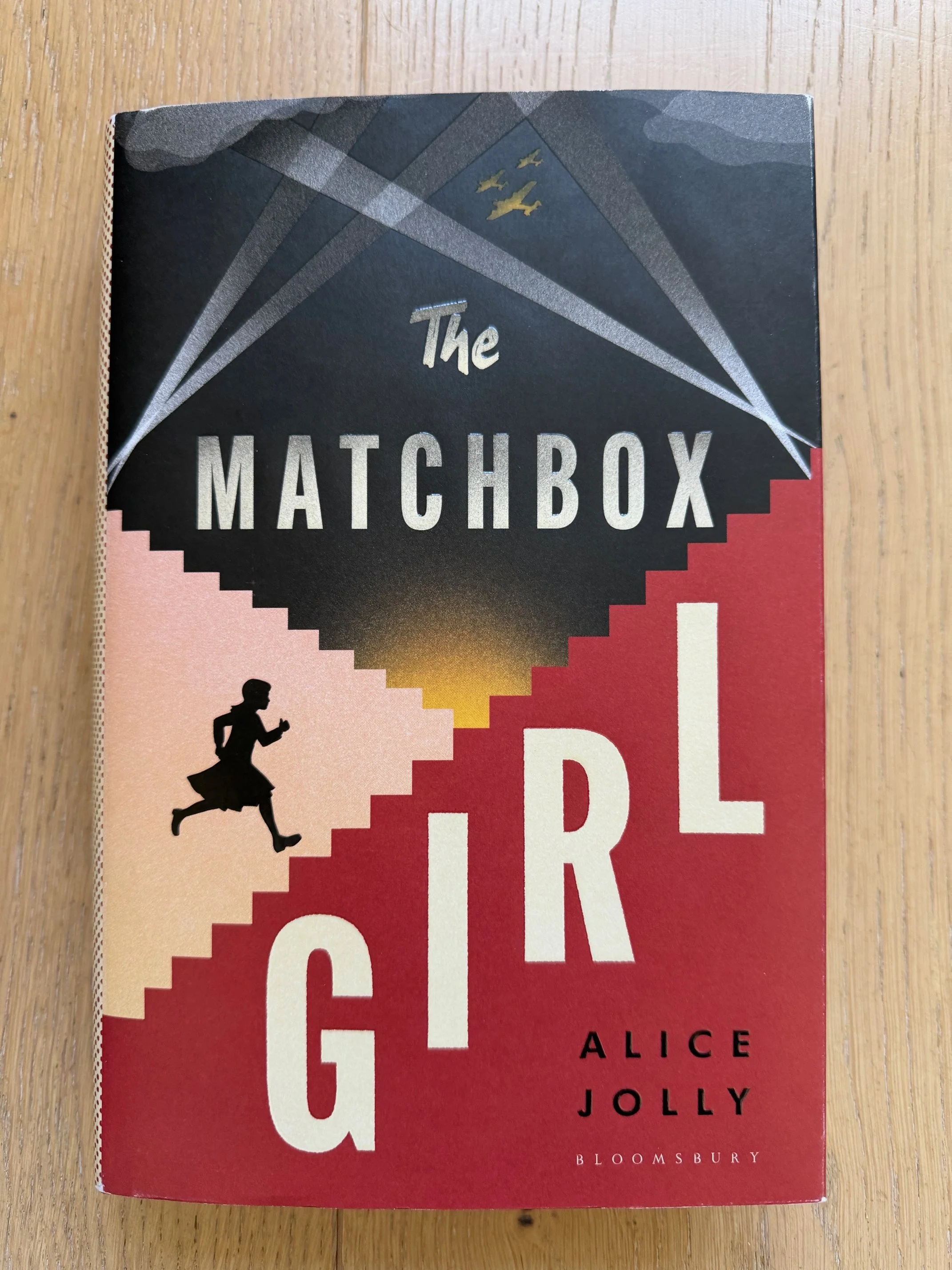
THE MATCHBOX GIRL by Alice Jolly (Bloomsbury, £18.99)