HOW TO BEGIN by Edmund de Waal first piqued my interest as I passed by Hatchards in Piccadilly in early November: the shop featured an eye-catching display of the newly published book. I was immediately attracted to the old, pale blue letters featured on the jacket artwork. I’ve always been a letter-writer, and believe that a good correspondence can be a powerful tool for human communication. I possess many old letters, all carefully preserved in their dated envelopes, and such documents speak volumes not just about the writer and the addressee, but, as decades pass, act as a guide to a particular period in time. I was intrigued by the premise of HOW TO BEGIN. When De Waal wanted to be a poet and a potter, as a teenager, he sent his poetry to his grandmother, Elisabeth Ephrussi, and she was generous with her advice. But she’d already had her own experience of mentorship, because when she was a young woman and an aspiring poet, back in 1921, she had in turn written to the great German poet of the age, Rainer Maria Rilke, who mentored her over a precious five-year correspondence. De Waal has his own little sheaf of his grandmother’s letters, scrawled on blue writing paper, and therefore the theme of letters, of letter-writing, the back-and-forth of questions and answers, is a strong thread throughout the book. HOW TO BEGIN is De Waal’s glorious, poetic and sensitive weaving together of real letters, personal family stories and history, plus photographs, all touching on the subject of creation, failure and apprenticeship. In the book, he muses not just on the art and the importance of mentorship, so crucial to the nurturing of any artistic endeavour, but he also focusses on the act of creativity itself: the time one must take to hone a craft or skill, an understanding that one must fail, and fail again, and most importantly, how critical it is to keep going. As a writer, this message fully resonated with me! The prose is elegantly written, the book feels satisfyingly weighty, and the layout is beautiful, with the shifting narrative captured in short chapters. To anyone embarking on an artistic path, the clarion call is: Begin anywhere! Don’t wait! This is the type of creative non-fiction that I want to press into people’s hands, much as I wanted to recommend De Waal’s prize-winning 2010 book about his family history, THE HARE WITH THE AMBER EYES - do read it, you won’t be disappointed!
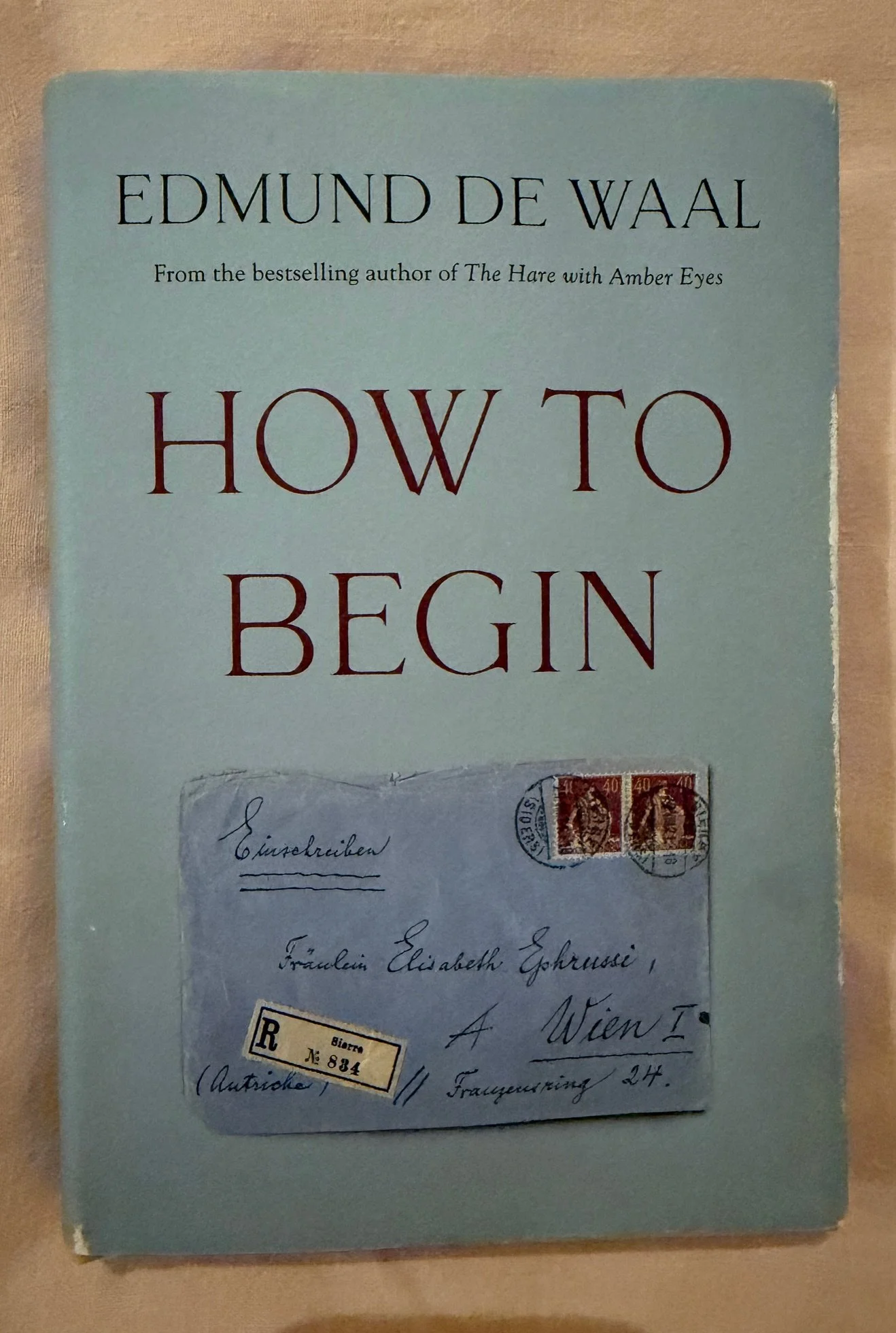
HOW TO BEGIN by Edmund de Waal (Chatto & Windus, £18.99)