Book review: John of John by Douglas Stuart (Picador, £20)
JOHN OF JOHN by Douglas Stuart is such a gloriously written and composed novel that I want to tell everyone about it. This is Stuart’s third novel - his first, SHUGGIE BAIN won the 2020 Booker Prize, and his second, YOUNG MUNGO, was published in 2022. Yet this is the first time I have read his work, and I wasn’t disappointed. I was attracted not only by Stuart’s formidable writing reputation but also by the book’s setting: the narrative unfolds on the windswept island of Harris in Scotland. Young Cal, newly out of art school on the mainland, but unemployed, has been summoned home by his taciturn father, John, because his grandmother’s health is apparently failing. He returns home feeling he’s a disappointment to his family, but is soon drawn back into the tight-knit community where he grew up - reconnecting with his childhood friend, Doll, and Doll’s sister, Isla, and his father’s only friend, bachelor Innes. Before long, John, who weaves Harris tweed as a sideline to being a sheep farmer, has pressed Cal into service. But Cal’s relationship with his dour Presbyterian father is complex - he disapproves of his only son’s long hair, and scruffy jeans, and there are violent moments. Cal’s mother moved out long ago, and now lives with John’s brother. Reading JOHN OF JOHN, I was utterly immersed in this complete and beautifully realised cast of characters, who are so intricately understood and described by Stuart that they felt real. As the seasons turn, and Cal reconnects with the beauty and allure of the island he’s tried to escape, family secrets start to emerge, and new relationships blossom, some of which must remain shrouded in secrecy. Stuart writes with great tenderness about the loneliness of homosexuality in a deeply religious and conservative community, and as Cal navigates his desires and disappointments, jeopardy, shame, and heartbreak are never far away. The novel is a long, engrossing read at 400 pages, and is bursting with inspiring prose - there are spectacular descriptions of the weather, and Stuart’s talent for evoking the colours used for weaving the Harris tweed are also wonderful. When Cal and John visit the mill together, for example, Cal muses: ‘The finished yarn would be an imperial purple, or if they added more navy and a little more fuchsia, it could become the exact colour of blackberries in August.’ I simply didn’t want this book to end. I am certain that JOHN OF JOHN will be scooping up awards before the year is out.
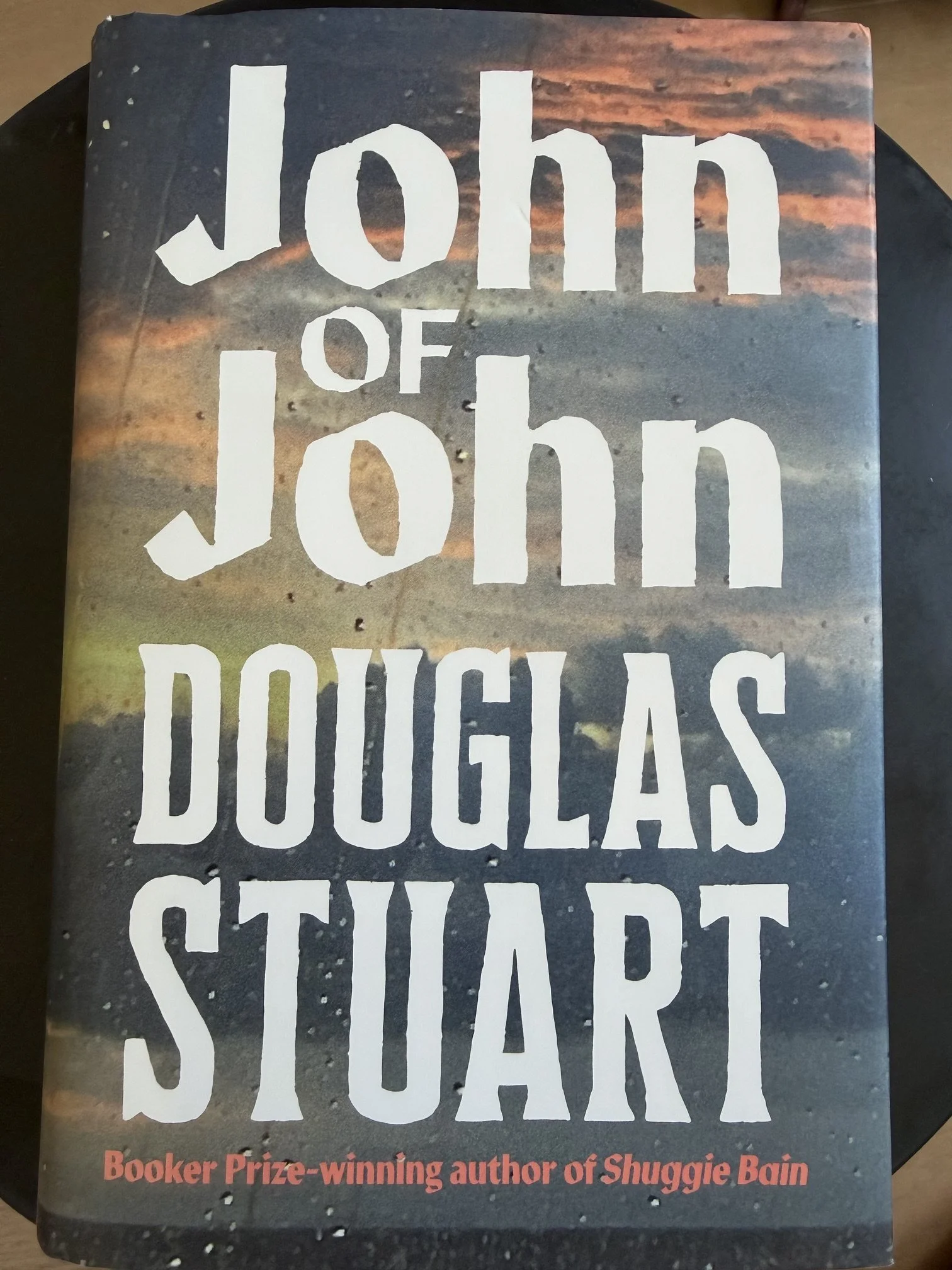
JOHN OF JOHN by Douglas Stuart (Picador, £20)