SAID THE DEAD by Doireann Ni Ghriofa (Faber & Faber, £18.99) is a novel that evades categorisation. It’s also a piece of work that invites a very slow and focussed read. I’m new to this author’s work - her book prior to this was A GHOST IN THE THROAT, which won the James Tait Black Biography Prize 2020 - but I’m now a fan. Doireann Ni Ghriofa is a poet, with seven published books of poetry to her name, and this is a novel that bristles with poetic lines. I’m not the sort of reader to mark a book’s pages, but I did find myself screenshotting the most lyrical passages, so I could return to them. How could I resist lines such as: ‘The shiver-gardens grew brittle, glittering with November frost’, or ‘And then, it was September. The workroom was sun-bright, the patients darning stockings … by the window sat Anna Martha, stitching a swirling motif on a length of yellow silk so long and lush that it streamed over her knees to pool beneath, gold as a river at dawn.’ Yet the book isn’t all beautiful words; it’s a haunting, sometimes devastating read, laced with tragedy and death. The setting is a now derelict, 19th-century mental hospital in Cork, which has now - like many Victorian buildings - been turned into flats. There are, effectively, two central characters in SAID THE DEAD - a modern-day woman, called The Reader (who, by the end, we realise is Ni Ghriofa), who is trawling the archives to uncover and reimagine the female patients who lived at, died, or finally left, the mental hospital, and Lucia, who worked there as a psychiatrist, and whose casebook and notes on patients The Reader carefully dissects. The character of Lucia is based on a real woman: Dr Lucia Strangman, born in 1870, who was the first woman doctor to work in Ireland’s asylum service, and an empathetic, forthright female, well ahead of her time. The narrative feels dreamlike, weaving back and forth between the many female patients and their fates, The Reader’s own struggle with her mental health, and Lucia’s true life experiences. After she participated in medical war work, during the First World War, she and her husband, John, also a doctor, subsequently opened an outpatient clinic for psychiatric patients, and they became pioneers in their profession. I fully submitted to never knowing exactly where I was in the narrative, or where it was going, and to the swirling time-frames, and this, perhaps, is one of the novel’s greatest strengths. We are not following a plot, as such, but Lucia’s life story, and The Reader’s own search for spiritual and mental peace, through the lives of these forgotten women. It proved to be one of those precious novels that prompted me to reach the end, then want to return immediately to page one. It also gave me moment to pause, and to consider the many women who will have passed through mental institutions in Victorian times, perhaps suffering depression or post-natal depression, or merely misunderstood by their husbands and families, and the fact that their power was stripped away, once they were incarcerated. It’s a moving read, and perhaps a necessary one. But most of all, I loved this book for its experimental style - mixing poetry, archive snippets, past, present, future - and the beauty of its language.
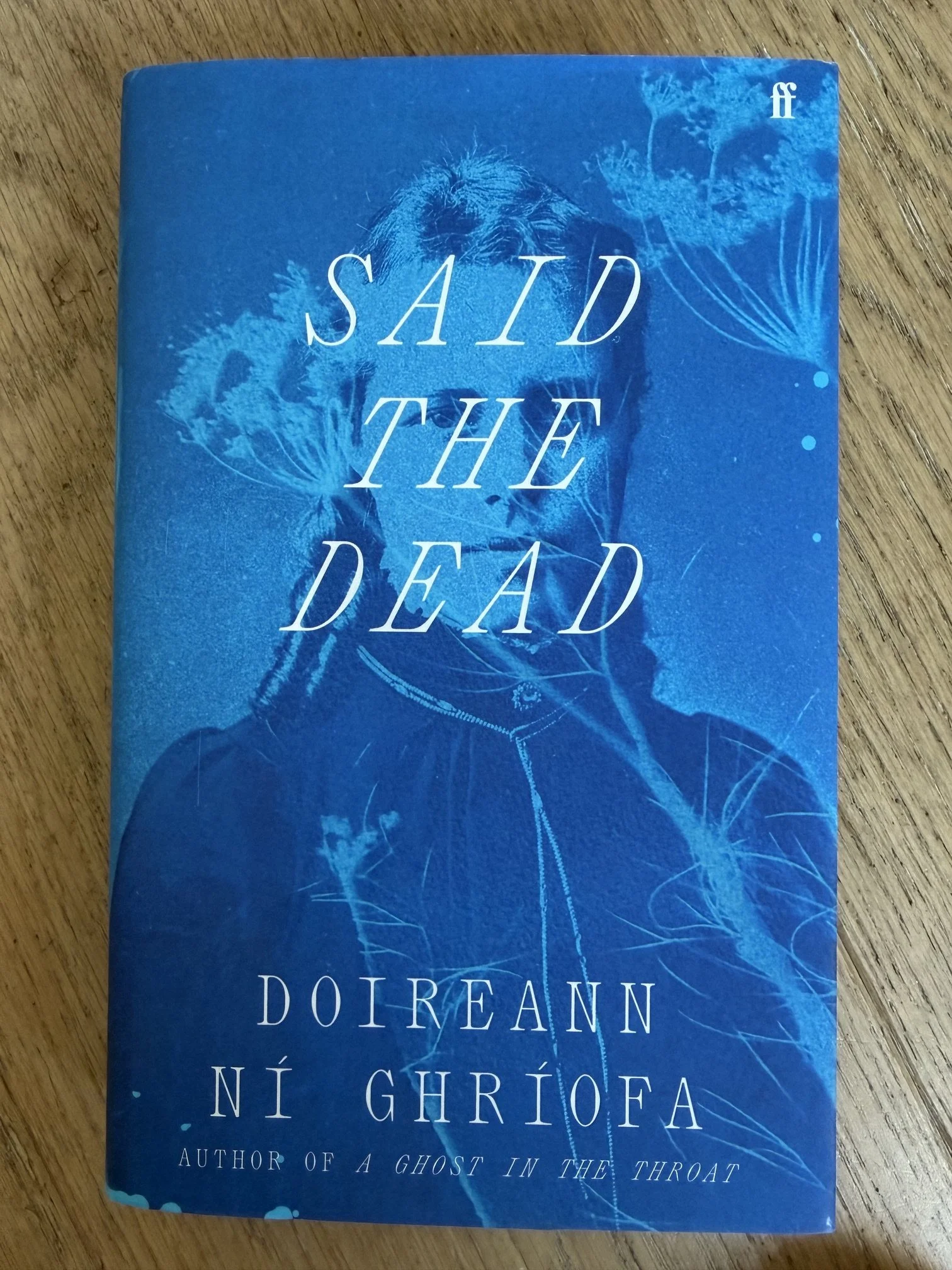
SAID THE DEAD by Doireann Ní Ghríofa (Faber & Faber, £18.99)